

How to Plan a Multi-City Train Trip in Europe Without Missing Connections
A practical guide to planning multi-city European rail trips, covering pass rules, seat reservations, realistic transfer buffers and how to handle a missed connection.
Three trains, two borders and a forty-minute window in Basel: that is the shape of a classic multi-city rail trip across Europe, and it works beautifully. Right up until a delayed regional service eats your entire buffer and you watch the Frankfurt train slide out of the platform without you.
The difference between a smooth trip and a tense one is rarely the trains themselves. It is the planning around them — knowing which services need a reservation, how much time to leave between arrival and departure, and what you will do if a connection fails. None of that is complicated. It just has to be sorted before you leave.
Plan the route as a line, not a list of cities
Most people start by writing down the places they want to see and then hunting for trains between them. It is more reliable to work the other way round. Draw the journey as a single line on a map, then look at what that line does in a timetable.
You will quickly spot the awkward legs: the cross-border hop with one slow service a day, the branch line that runs hourly until early evening, the stretch where every train seems to need a change in a city you have never heard of. Those are the parts to build the trip around, not the famous cities at either end.
Aim for two or three bases a week rather than a new city every morning. Long rail days are enjoyable; four of them in a row are not. If a leg is genuinely long, break it with a lunch stop that is worth the walk from the station — it turns six hours in a seat into two manageable halves.
Understand what your pass or ticket actually covers
A rail pass covers the fare. It does not always cover the seat. This is the single most common misunderstanding, and it catches people on high-speed and overnight services where a reservation is compulsory rather than optional.
As a rough guide, expect to book and pay separately for seats on French TGV services, Italian high-speed trains, Spanish long-distance trains, Eurostar, most international night trains and many cross-border high-speed routes. In Germany, Austria, Switzerland and the Netherlands you can usually walk up and board regional trains and most intercity services without a reservation, though on a busy Friday it is worth having one.
Check the rules for each country on your route individually, and check them again for each operator. A pass that is valid everywhere is not the same as a pass that gets you a seat everywhere.
Book the awkward reservations first
Once your route is fixed, book in this order: night trains, then international high-speed trains, then everything else. Sleeper berths sell out first, especially in summer, and a popular cross-border service can be full weeks ahead.
Book directly with the operator where you can — it is usually the clearest source of information about reservation rules and the most reliable place to make a change. Where a journey crosses several networks, a single through ticket is worth paying a little more for, because it gives you protection if a delay makes you miss the next leg. Two separate tickets do not.
Save every reservation as a PDF on your phone and, if you are crossing several borders in a day, keep a paper copy in your bag. Screenshots are fine until your battery dies.
How much time to leave between trains
Buffers are where most multi-city trips are won or lost. These are sensible minimums for a traveller with luggage, not a commuter with a rucksack:
- Same station, domestic, same operator: 15–20 minutes.
- Same station, cross-border or a change of operator: 30–45 minutes.
- Change of station within one city: 60–90 minutes. Paris Nord to Gare de Lyon, Madrid Atocha to Chamartín and London Euston to St Pancras all take longer than they look, especially with bags.
- The last connection of the day: 60 minutes or a plan B. Never make the final train of the evening a tight one.
- Any leg involving a ferry, a rail replacement bus or a rural branch line: add 30 minutes on top.
Two more things eat time quietly. Platform numbers in France and Italy are often posted only twenty minutes before departure, so a generous connection is not really generous. And on some routes, particularly around borders, passengers and luggage are checked on board, which slows everything down.
Navigating an unfamiliar station
Big European cities have several stations with similar names, and the one you want is not always the one that sounds obvious. Look up the exact station name before you book, and note it somewhere you can read it without wifi.
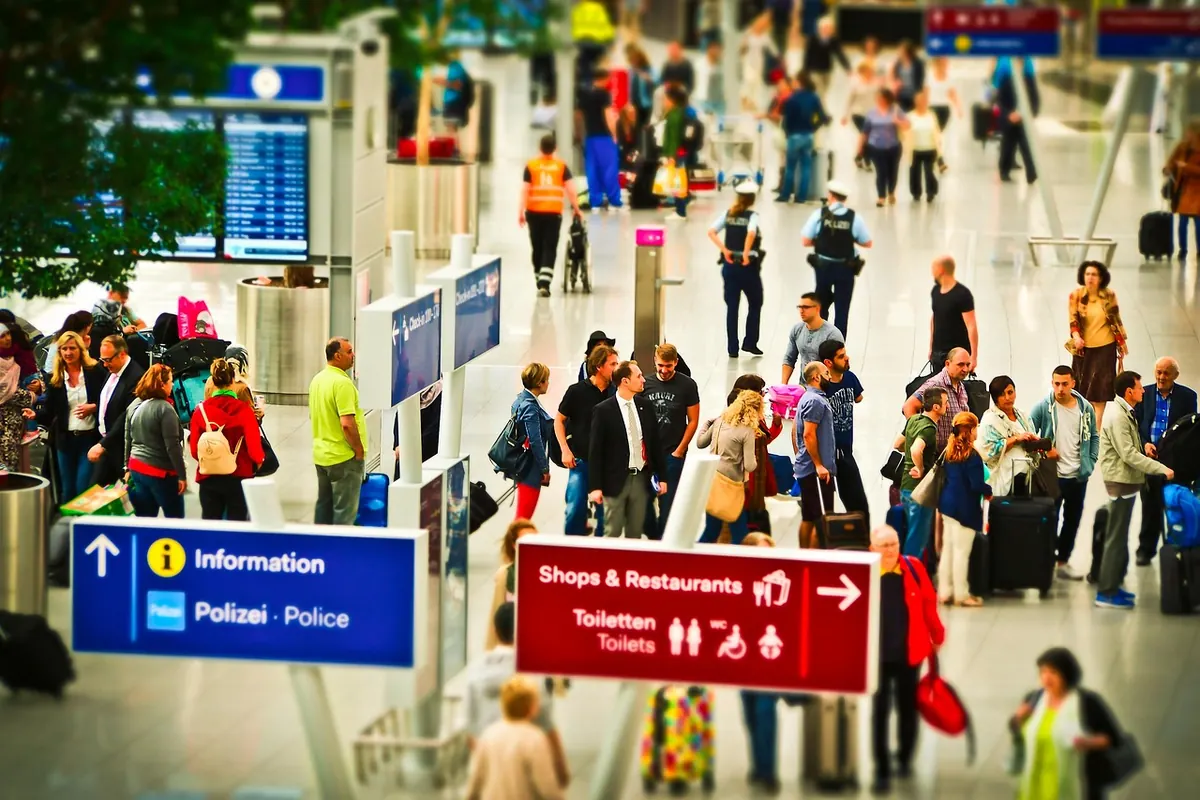
When you arrive, do not head straight for the platform. Find the departure boards first, confirm the platform, then locate the nearest facilities and a bench. Platform changes are common in the final fifteen minutes, so stay within sight or earshot of a screen until your train is showing.
A few practical habits help. Keep your ticket or pass accessible rather than buried in a suitcase. In some countries you must validate a paper ticket in a machine before boarding — if in doubt, ask at the information desk. On cross-border services, carry your passport or ID card in your pocket, since checks can happen without warning even inside the Schengen area. And remember that crossing a time zone changes your arrival time, not your departure time: set your watch when you board.
Plan for the connection you miss
Assume one will go wrong somewhere. Before each travel day, look up the train that leaves an hour or two after your booked one, and note whether there is a later service at all. On minor lines there often is not.
If you miss a connection on a through ticket, go to the ticket office or a staffed information desk and ask to be re-routed. Keep the ticket, note the delay, and be patient but clear about what you need. If you are travelling on separate tickets, you are on your own, which is exactly why the extra cost of a through ticket is often worth it.
The night before each travel day
Ten minutes of preparation removes most of the stress. Check your reservations, confirm the station names, screenshot the timetable, pack your charger and passport where you can reach them, and set an alarm with a buffer for the walk to the station.
Then decide, in advance, where you will sleep if the day falls apart. Knowing there is a hotel near the interchange station — and that you can afford it — turns a missed connection from a disaster into an unplanned evening out.
Photo: Wallula / Pixabay